
Innovation-driven
We challenge assumptions, explore broader design spaces and turn promising ideas into disciplined engineering progress.

AmpliFinesse is a Paris-based semiconductor company. We combine low-noise amplifier expertise, an innovation-driven culture and AI-enabled end-to-end engineering to develop Wi-Fi and satellite receive ICs from concept through validated silicon.
We challenge assumptions, explore broader design spaces and turn promising ideas into disciplined engineering progress.
We specialize in LNA design for Wi-Fi and satellite communication receive chains where sensitivity and integration are critical.
Our internal AI capability strengthens requirements, architecture, exploration, verification and silicon learning under expert control.
The following products are in development. Specifications are preliminary engineering targets and may change before commercial release.
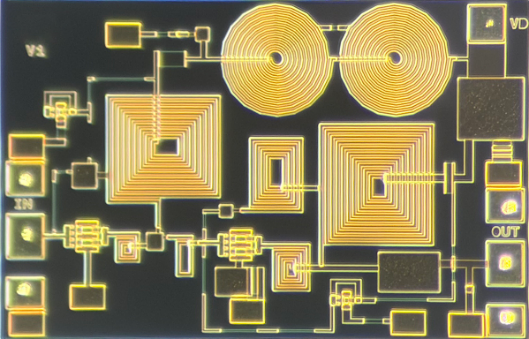
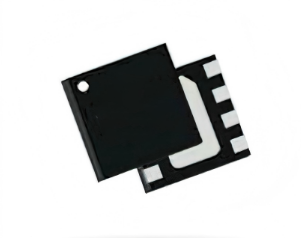 AF / 01Planned product
A low-power receive-front-end LNA for 2.4 GHz ISM-band Wi-Fi devices, designed to improve weak-signal reception while limiting added noise and in-band interference.
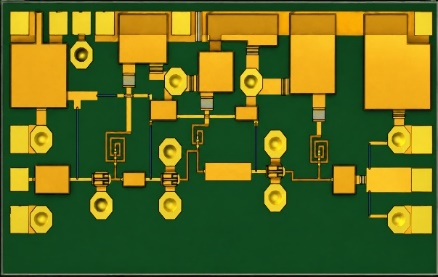
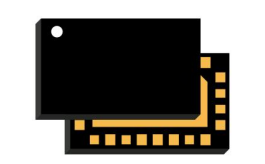 AF / 02Planned product
A high-gain LNA covering the 5 GHz Wi-Fi band, targeting low system noise, resilient reception and efficient integration in dual-band wireless equipment.
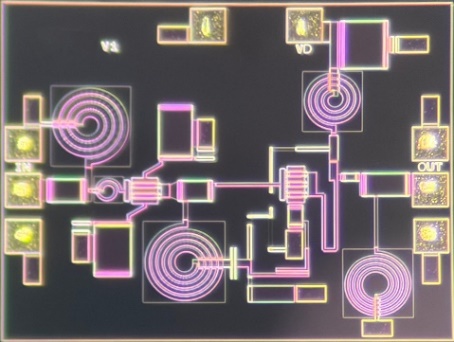
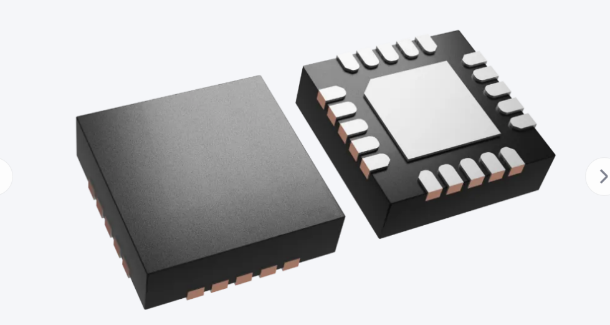 AF / 03Planned product
A broadband receive LNA for LEO satellite user terminals and gateways, designed for low noise, strong gain and compact phased-array front-end integration.
AI is embedded in AmpliFinesse’s internal engineering workflow—not offered as a standalone service or software product. It expands design coverage while engineers retain architecture, judgment and sign-off.
Connect product targets, proven architectures, device constraints and prior results before circuit exploration begins.
Use AI-guided search to compare schematic and post-layout options across performance, power, area and robustness.
Analyze RF, PVT, Monte Carlo and waveform evidence to reveal sensitivity, outliers and failure mechanisms before tape-out.
Turn characterization, test and production insight into reusable internal models, constraints and engineering decisions.
Our internal capability stack connects RF design, validation, industrialization and application support in one controlled journey.
Architecture, schematic design, layout ownership and sign-off for high-performance RF receive ICs.
LNA development balanced across noise figure, gain, linearity, matching, stability, power and area.
Evaluation hardware, laboratory characterization and design refinement that connect simulation to measured behavior.
Controlled technical transfer across outsourced fabrication, assembly and test partners.
Package selection and integration shaped around RF performance, thermal behavior, footprint and manufacturability.
Reference matching, receiver integration guidance and technical continuity from evaluation through design-in.
One controlled lifecycle preserves RF intent as each AmpliFinesse IC moves from specification to silicon, package, production and customer evaluation.
Start with your requirementsTranslate the product ambition into measurable RF, physical and commercial requirements.
Create and verify the architecture with explicit decisions around performance, robustness and cost.
Build, characterize and refine silicon, packaging and evaluation hardware.
Coordinate technical transfer across fabrication, assembly, test and supply partners.
Support customer evaluation, receiver integration, design-in and lifecycle continuity.
The initial lineup focuses on receive chains where weak-signal sensitivity, low power and compact RF integration are fundamental.
Sensitive receive paths for access points, routers and dual-band wireless infrastructure.
Receive chainCompact, low-power receive amplification for connected devices and portable platforms.
Receive chainKu-band receive amplification for user terminals and electronically steered arrays.
Receive chainBroadband receive-front-end building blocks for gateway and ground-station equipment.
Receive chainShare your target band, sensitivity, integration constraints and program timing. We’ll identify the most relevant product path and prepare a practical design-in plan—from reference matching to receiver integration.